
What players say
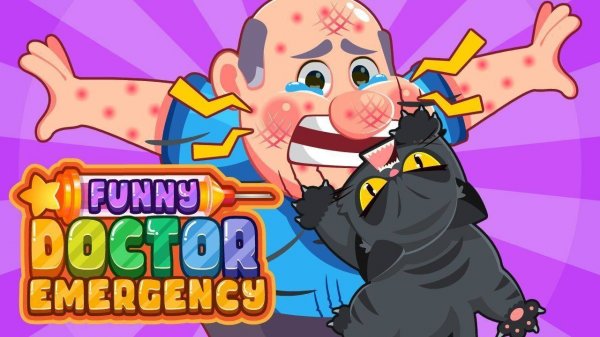
Whimsical Hospital: Puzzle Healers stands out for its ability to combine education with pure fun. The puzzles are clever without being frustrating, and the characters are genuinely endearing. Parents will appreciate the safe, ad-free environment (in paid versions) and the focus on positive reinforcement. It is a wonderful tool for developing early problem-solving skills in a relaxed setting.
About this game
Understanding the Puzzle Mechanics
In Whimsical Hospital: Puzzle Healers, each patient encounter is a self-contained puzzle. The game presents a cartoon character with a visible, humorous issue—like a robot with a loose gear or a clown with a tangled shoelace. Below, a selection of colorful tools appears. Players must observe the problem and match it to the correct item. This process encourages careful observation and logical thinking, as each puzzle has one clear solution. The interface is designed for young children, with large icons and simple touch controls that make selection easy.
Patient Variety and Humor
The game features a rotating cast of characters, each with a unique and silly predicament. A baker might have dough stuck in their hair, while a musician could have a stuck trumpet. These scenarios are designed to be amusing without being scary or complex. The humor comes from the absurdity of the situations, keeping the tone light and engaging. This variety ensures that no two puzzles feel exactly the same, providing fresh challenges as players progress through the clinic.
Visual Design and Atmosphere
The graphics are bright and colorful, with a cartoon style that appeals to young audiences. The clinic setting is welcoming, with soft colors and friendly animations. Characters express clear emotions through their faces and movements, helping children understand the context without text. The sound effects are gentle and positive, with cheerful tunes playing after each successful treatment. This creates a stress-free environment where children feel comfortable exploring and making choices.
Learning Through Play
While the primary goal is entertainment, the game subtly teaches problem-solving and empathy. By observing each patient's need and selecting the appropriate tool, children practice cause-and-effect reasoning. The positive feedback—such as smiles and thank-yous—reinforces helpful behavior. The game avoids any negative consequences for wrong choices, simply allowing players to try again. This design makes it suitable for very young children, supporting early cognitive development in a playful context.
Progression and Motivation
As players successfully treat patients, they may unlock new cases or receive virtual rewards like stickers or stars. This progression system provides motivation without pressure. The game does not include timers or scores that could cause anxiety. Instead, it encourages players to take their time and enjoy each interaction. The structure is linear, with each new patient presenting a slightly more complex puzzle, but the difficulty remains accessible for the target age group.





Player comments
Sign in to comment
You must be logged in before posting a review or rating.
No account? Create one
No comments yet. Be the first to comment!